Showing posts with label DIY. Show all posts

Friday, November 2, 2018

DIY Bathroom Design Ideas When on a Budget

You can save thousands and increase your home’s value when you upgrade your bathroom yourself. Your day begins and ends in the bathroom, so why not turn it into an attractive place that you can enjoy.

DIY bathroom decorating and design ideas

A bathroom makeover doesn’t have to cost a fortune. Good ideas combined with your creativity, and a little motivation can produce stunning results.

homeandgardeningguide.com has collected some of the best DIY bathroom projects, professional advice, and expert tips to help you quickly personalize, update, and transform your bathroom.

Using Decor to Make an Old Bathroom Look New

Since bathrooms are smaller in size, compared to other rooms in your home, they are inherently easier to spruce up. Any of the following tips, besides being inexpensive, can be accomplished in a matter of minutes:

Shower Curtain – With an infinite number of designs, themes, and color schemes, you can immediately change the vibe of your bathroom with a new shower curtain.

Towels – Towels serve more than one purpose in a bathroom. Not only do they dry us off, but they can also play a part in the decorative color scheme or theme. Like shower curtains, towels come in an infinite array of themes and colors.

Bathroom design and remodel towels

Bath Rug Set – Bath rugs offer added comfort to your bathroom, as well as a touch of style when they compliment the shower curtain and towels.

Bathroom Accessory Sets – Including everything from a soap dish, liquid soap dispenser, tissue box cover, toothbrush caddy, etc. These sets allow you to give your bathroom a stylish and personal touch.

Bathroom design DIY decorating accessory set

Plants – With the ability to fit into any decor, a plant brings a “live” aspect to your bathroom. The pot it comes in or fits into should match the basic color scheme or theme you’ve created.

Be sure to select plants which tolerate high humidity and low light exposure like snake plants, orchids, and grape ivy.

Candles – Strategically placed on a countertop or shelf, candles can be used to freshen the air, provide lower lighting, or be a decoration. Since candles come in various sizes, colors, scents, and shapes, they can be mixed and matched to complement the bathroom’s decor.

Bathroom Wall Ideas

The wall space in your bathroom can be transformed into storage, shelving, a place for pictures, or painted to fit your new decor. The following bathroom wall ideas will require some tools and preparation but continue to be low budget and easy to accomplish.

Paint – One of the most significant transformational actions you can take in a bathroom is to paint it. Here are some of the ways this can be done:

• All walls one color.
Bathroom decorating DIY painting
• Each wall a different color within the scheme.
• One “accent” wall with a darker contrasting color.
Bathroom design and decorating accent wall
• 2 toned with the darker color at the bottom.
• Stencils to paint figures or words.

Pictures – Hang a map, an old poem, picture, or set of images with frames that compliment the decor. Images of nature and still photography do very well in this environment.
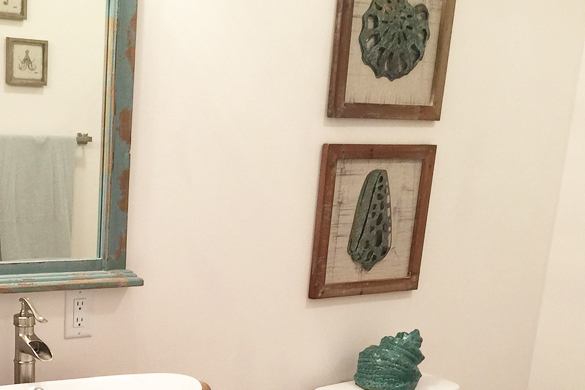
Bathroom remodel picture decorating

Mirrors – Add an additional mirror to the bathroom. Mirrors can magically make small spaces seem large, especially when they are hung opposite each other.

Shelves – Both practical and aesthetically pleasant, there’s just something about a shelf that gives a wall new life.

Bathroom DIY decorating shelves

Hanging Cabinet – Great for storing extra towels or toiletries, the space above the back of the toilet is a great place to hang a small cabinet.

DIY bathroom decorating hanging cabinet

Curved Shower Rod – Install a curved shower rod to give a more substantial feel to the shower.
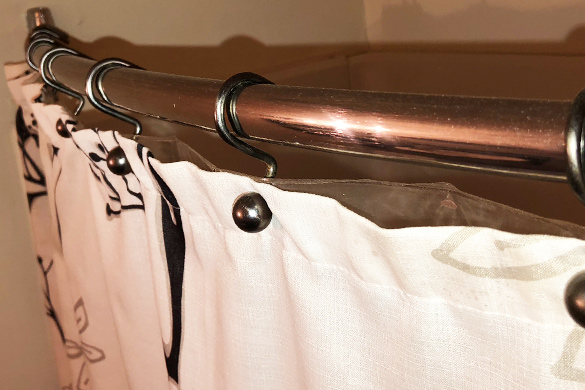
Bathroom design ideas curved shower rod

Tip: Use extreme caution any time you drive a nail into or must drill through a wall in your bathroom. Use a stud finder to locate wooden beams behind the drywall and use them for hanging or fastening if possible..

How To Spruce Up Your Bathroom on a Budget

Transform your bathroom into a place you want to be. Whether the morning routine, makeup, shower, or taking care of business, most people spend 30 minutes to over an hour per day in their bathroom. Your experience and bathroom space should be appealing and pleasing to the senses.

In this article, you discovered some of the best DIY bathroom projects, expert tips, and professional advice to help you transform your bathroom even if you are on a tight budget.

Before spending your money on interior designers and decorators, get motivated and use your creativity to spruce up your bathroom. You could save thousands of dollars and increase your property value and appeal when you do it yourself.

Sources:
https://keepstudy.org/diy-bathroom-decor/
https://www.remodelingcalculator.org/9-bathroom-decor-ideas/
https://www.remodelingcalculator.org/small-bathroom-makeover/

Visit www.homeandgardeningguide.com/decorating/bath/ for more decorating and design articles, resources, DIY and how-to tips.

The post DIY Bathroom Design Ideas When on a Budget appeared first on http://www.homeandgardeningguide.com

Friday, August 31, 2018

How To Plant Evergreen Shrubs

Evergreen shrubs and hedges keep your yard looking alive and vibrant all year long. With a bit of planning, you’ll have a fantastic landscape, and your neighbors will be green with envy.

Planting evergreen shrubs in your yard or along the property line can give your home better curb appeal, potentially raising its overall market value. The visual and financial payoff these shrubs can provide does indeed justify planting them.

Shrubs in front yard landscape and driveway

The gardening and landscaping team compiled the following information and tips to guide you through the process of planting evergreen shrubs around your home and yard.

What Is the Best Time to Plant Shrubs?

According to 72tree.com, for optimal root development, fall is the best time to plant shrubs.

While the trunk, branches, stems, and foliage on evergreens slow down for the winter, the roots are silently growing below ground. Planting in the fall allows the roots to use stored carbohydrates from the previous growing season for their growth.

Shrub planting in landscape and yard curb appeal

Naturally, as warmer months approach, a better-established root system is more capable of absorbing sufficient water and nutrients to support the shrub’s growing season.

Planting container-grown or balled-and-burlapped shrubs in the landscape industry happens year-round. Often, after a spring planting, there are not enough roots to supply and satisfy the demand of new growth, wilting is a common symptom (stressing the shrub) until the roots can catch up.

For regions that experience long and cold winters with excessive winds, avoid fall planting. In these areas, planting in early spring (after the ground thaws) will spare the plant from winter burn and other potentially fatal stressors.

How to Plant Shrubs

Choosing the Location – There are many reasons to plant shrubs or hedges. Whether it’s to create a division along property lines, to accent sloping features in your yard, or to serve as a windbreak for your trees or home, choose your planting location wisely.

Some of the factors you should consider are:

  • Location on the USDA Hardiness Zone Map
  • Sun/Shade exposure
  • Soil drainage
  • Soil type
  • Soil pH level
  • Space for growth

Once you’ve answered these questions, it’s time to decide on what is going there.

Deciding on the Species – If you haven’t already chosen the species of evergreen shrub, here are a few pointers to keep you from making a bad judgment call.

Blooming shrubs in landscaped yard

Refer back to the hardiness zone map and select a species that will thrive in your particular zone.

  • Know the plant’s mature size (how big will it get).
  • Choose a species that will accomplish the goal you are planting it for.
  • Familiarize yourself with the needs of the species, e.g., water, fertilizer, pruning, etc.

Ask the following questions:

1 – Is this an invasive species?
2 – Are there any pest/insect issues with this species?
3 – Does my selected location meet the growing needs of the species?
4 – What is the average lifespan of the species?
5 – Is this a blooming species and when will it bloom?

Best Soil for Planting Shrubs – Needled evergreens like pines, spruce, and fir tolerate a slightly acidic soil pH ranging from 5.5 to 6.0, whereas broadleaved evergreens and acid-tolerant plants such as rhododendrons, azaleas, mountain laurel, heath, and blueberry prefer a pH ranging from 4.5 to 6.0.

Soil pH – Having tested the soil in the location selection process, determine if you need to raise or lower the pH level. You can achieve the right pH for your evergreen by mixing one of the following into the soil dug from the hole,

To Raise the Soil’s pH Level – Use compounds containing powdered limestone or lime. You will find lime in pulverized, pellets, granules, and hydrated types. Each type will raise the pH level at a different pace.

Shrub planting granular lime soil pH

To Lower the Soil’s pH Level – The addition of sulfur, pine needles, compost or composted manure, will work to reduce the pH level slowly. For more immediate results, consider the addition of aluminum sulfate.

Planting evergreen shrubs compost for soil pH

Fertilizer – It is not recommended to fertilize newly planted evergreens until their second growing season. The first year focuses on root growth and establishment, fertilizing will encourage growth top-side which the roots may not be able to keep up with. Read here for more info on fertilizing your evergreens.

Preparing the Planting Location – Now that you are ready to plant, there are a few measurements that you will need to know:

Depth – Measure the root ball from just below the root flare (where the first roots grow from the trunk) to the bottom of the root ball. That measurement is how deep you will dig your hole.

Digging hole before planting shrubs

The bottom of the hole should be undisturbed land to avoid settling. A common mistake when planting shrubs is to plant them too deep or too shallow. Either scenario will hinder the shrubs ability to reach maturity.

Diameter – The diameter of the hole should be 3 to 5 times that of the root ball. In compacted or clay soil, the hole should be dug 6 to 7 times the diameter of the root ball to provide optimum root development and growth.

Planting Your Evergreen Shrub – Now that you have the right size hole and pH adjusted backfill (the soil dug from the hole), it’s time to plant.

1. Remove the root ball from the container or burlap and trim any circling roots.
2. Keeping the root ball intact, place it in the hole and make sure that the root flare is just above ground level (for compacted or clay soil environments, the top of the root ball should remain about 1 inch above ground level).
3. Evenly distribute and gently pack the backfill around the root ball, removing any clumps or large stones.
4. Fill the hole up to the top of the root ball without burying the root flare.

Watering Newly Planted Shrubs

For shrubs to establish themselves in a new location, they need water. Immediately after planting, water the entire area that was dug and backfilled, as well as a deep watering (2 to 3 gallons per inch of trunk diameter) for the root ball.

Watering shrubs planted in yard

After the initial watering, water your newly planted shrubs or hedges to keep the soil moist – not soaked. Continue to water in this manner until winter time, providing one last deep watering before the ground freezes or temperatures reach constant freezing points (32 degrees Fahrenheit ).

It is essential to understand that intermittent rainfall may not provide enough moisture for root development, especially for well-drained soil. Water as needed.

Advantages of Mulching Shrubs

Mulching provides two types of protection for a growing root system. First, mulch helps the soil retain moisture. Second, as winter sets in, mulch helps the soil retain warmth. Both aspects serve to create an optimal growth environment for the shrub’s roots.

After planting and watering, apply a 3-inch layer of organic mulch to the planting area. Keep mulch 3 inches away from the trunk and root flare to avoid root rot and decay.

People Also Ask

Q: How Do You Know How Far Apart to Plant Shrubs
A: When determining which shrubs or hedges to plant, knowing the size at maturity will give you the measurements for spacing between them.

Q: How Do You Prune an evergreen Shrub?
A: After the first growing season, remove diseased, dead, infested, or branches that rub together. Since pruning encourages growth, do not prune after mid-summer, as the new plant material won’t have time to harden before winter.

Q: Shrubs for Windbreaks?
A: Yes. Shrubs are very effective at diverting wind. Often, they are used alongside a home to deflect winter wind, or along landscapes to minimize prevailing winds on trees. Shrubs are also very effective at protecting gardens.

Your Landscape and Evergreen Shrubs

Shrubs have become the go-to feature for adding detail and beauty to otherwise bland landscapes and yards. When done right, the addition of shrubs and hedges can increase your home’s curb appeal, potentially raising the value of your home.

Shrubs and hedges behind bench landscape

Following the above guidelines and tips will help you make informed decisions and successfully plant evergreen shrubs and hedges. Remember to choose the location and species that will have the best chance of reaching maturity and get them planted by mid-fall.

The benefits of these shrubs cannot be overstated. Besides adding diversity to the surrounding ecosystem, shrubs divert wind, protect other plants, and when they flower, will attract both insects and animal life beneficial to the surroundings.

Sources:
https://hgic.clemson.edu/factsheet/planting-shrubs-correctly/
https://www.johnson.k-state.edu/lawn-garden/agent-articles/trees-shrubs/planting-trees-shrubs-in-fall.html
https://ag.umass.edu/landscape/fact-sheets/guidelines-for-planting-trees-shrubs

The post How To Plant Evergreen Shrubs appeared first on http://www.homeandgardeningguide.com

Friday, June 1, 2018

Backyard Landscaping Ideas

Your backyard is an important part of your home’s environment. Some well planned and functional landscaping has the potential to increase your property value while providing a year round special and joyful destination for your family and friends.

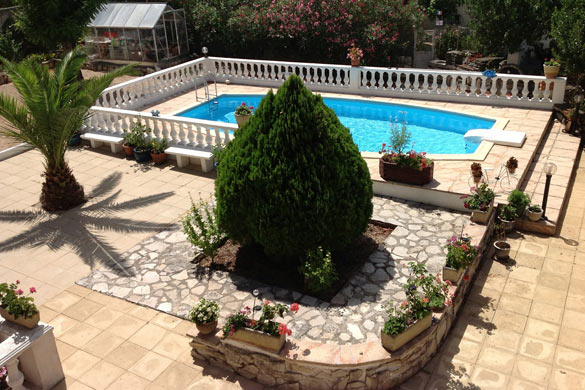
Hardscape and landscape backyard design with pool

With all of the potential backyard landscaping possibilities, this project will require some careful and well thought-out planning. You will need to take into consideration the way you want to use your outdoor living space, the architectural features of your home, and the natural layout of your backyard.

The team at homeandgardeningguide.com has gathered the following ideas for backyard landscaping, as well as some design and planning tips.

Backyard Patio Ideas

For some, a backyard patio is just a slab of concrete with no higher purpose. However, with a bit of creative landscaping and a plan, your patio can be transformed into a destination spot for the whole family.

Planting Shrubs – Partially enclosing your patio can be accomplished by planting shrubs or bushes around its perimeter. As they grow and fill in the gaps, they can be shaped or draped with Christmas lights to create a fun or even romantic atmosphere.

Flowers and Plants – For a more open feel to your patio, consider planting a flower garden around it. Trellises can be erected for climbing vines, while decorative planters can be placed or hung in the corners (for covered patios).

Backyard garden and patio design

NOTE: According to toddsmariettatreeservices.com, when considering what species to plant and where to plant it, be mindful that trees and some larger shrubs have invasive roots. If planted too close to your patio, they could potentially break, buckle, or crack it.

Gravel or Stone Pathway – If your grill or fire pit are set away from the patio, create a gravel or stone pathway to them.

Garden Landscaping for the Backyard

Your backyard garden options are practically unlimited. Whether you choose flowers, spices, or fruits and vegetables, gardens create an engaging and useful space.

Bordering Gardens – Gardens can be used to accentuate landscaped grass designs, as walkway borders, or along the fence-line encompassing the backyard.

Planting gardens in this manner creates a sense of definition and gives the overall appearance of having depth.

Raised Gardens – Another fantastic way to create a dynamic appearance in your backyard is to plant raised gardens. This is accomplished by building or placing “box containers” in rows, squares, rectangles, or along the natural features of the land.

This is an ideal scenario for planting an organic garden. With organic gardening, one of the objectives is to have control over what goes into the soil. Having raised gardens naturally isolates the soil, giving you complete control.

Zen Garden – A zen garden is intended to be a place of peace and quiet – an area for meditation and self awareness. These gardens can take on a variety of shapes, colors and designs.

Backyard landscape with zen garden

Commonly seen are those with a large flat area of white sand. Generally, in the sand there will be periodic large stones or islands of well pruned vegetation. Then in the sand, around the vegetation and to the border, a rake is used to create flowing designs.

Water features such as fountains, small streams, or waterfalls are often added to zen gardens to enhance their calming affects and peaceful vibrations.

Landscaping Trees in Your Backyard

Depending on the overall space and hardscaping in your backyard, trees can add shelter, shade, beauty, and grace all at once. It is important to know which species of tree you are planting in which location.

Roots – Many tree species have invasive roots that will grow far from the tree in search of moisture; this can take them under pathways, porches, patios, and even a home’s foundation. As the roots age, they thicken and begin to apply consistently growing pressure until they either die or break through whatever they are under.

Height – There is also the question of height. Overstory trees are those that reach 60ft and above, while understory trees will typically reach only 12-15ft in height. The use of both in landscaping is common practice and very rewarding as they reach maturity.

Deciduous or Evergreen – One very important consideration to make (when it comes to trees) is whether or not you want to rake leaves in the fall.

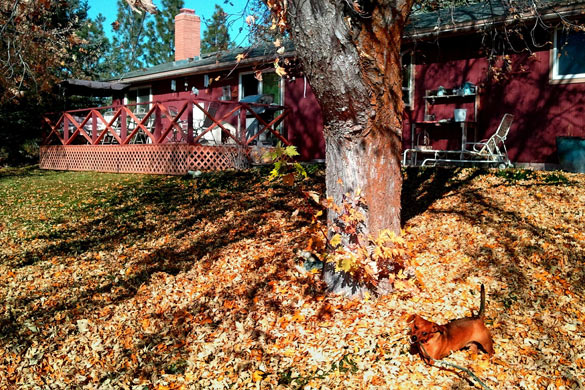
Backyard landscape deciduous tree

Evergreen trees are (as the name implies) green all year long. They will lose small portions of their foliage throughout the seasons, but nothing requiring a rake and leaf blower.

Deciduous trees will typically put on a color show as colder temperatures arrive, and will lose all of their foliage as the tree enters a state of dormancy through the winter months.

Backyard Fire Pit Ideas

It could be the middle of summer on an 85 degree night and for some reason, people will still flock to a fire pit. If having a fire pit in your backyard will provide a desired charm, take the following into consideration.

Location – A fire pit should not be located within 10 feet of any structure or flammable surface. Your trees are another concern, having a lit fire pit under the canopy of a tree is never a good idea.

Ideally, a fire pit should be positioned over gravel, brick, concrete, or other non-flammable surface.

Fire pit in landscaped backyard

Surrounding the fire pit with non-flammable, weatherproof furniture is a way to create a “cozy” gathering spot for late night conversations, meals, or a place to congregate during half-time of the game!

Weather – Fire pits should not be lit under windy or adverse weather conditions. The wind could carry hot embers to surrounding structures potentially resulting in a fire.

Backyard Pool Ideas

Pools come in all shapes and sizes, above and below ground. With the installation of a pool, you must also account for its plumbing, the pump, and filtration unit locations.

Installing a pool creates opportunities for both landscaping and hardscaping. Choosing evergreen trees over deciduous ones will save both time and effort in the fall. Adding more hardscaping around the pool’s perimeter will also help in keeping it free of debris.

As with most backyard pools, they are typically centered and the rest of the landscape is designed around it.

Hardscaped backyard with pool

As pool installations can be a major expense, homeowners will often landscape their backyards placing trees, shrubs, gardens, and other permanent fixtures around the perimeter, allowing for the installation of a pool at a later date.

Landscaping Design and Plan

Design – The first step to successfully landscaping your backyard is to create a design. You can accomplish this in one of several ways.

  • Hire a professional landscape company to do it.
  • You can get a ruler, pencil, and paper to do it yourself.
  • Download one of several free landscape design programs (some are drag-and-drop).

Getting the design and its dimensions right is crucial to the outcome of the job. When putting the design together, you should be aware of the following:

Landscape design trees hardscape
  • Total area of the backyard.
  • Location and occupied space of current vegetation.
  • Location and dimensions of retainer walls and other structures.
  • Location of underground utilities and their depth.
  • Dimensions of structures to be added.
  • Space required for new trees at their maturity.
  • Designate outdoor use areas

As you build your ideal landscape design, know what your needs are and plan the area accordingly. Sketch as you go and try to visualize how the completed job will look.

Some people seek symmetry while others design to draw attention either to or from aspects of the landscape. However you intend to design yours, make certain that your proportions are right and that you account for the growth of your trees, bushes, and shrubs.

Plan – Now that you have a design and clear idea of how you want the end result to be, it’s time to make a plan. Components of that plan for the DIY homeowner should include (but is not limited to):

Legal Matters:

  • Placing a request for the utilities company to flag underground utilities.
  • Acquiring a tree removal permit if any trees are to be removed.
  • Acquire land disturbance permits if your municipality requires them for private property.

Pricing for:

  • New Trees, Bushes, and Shrubs
  • Plants, Turf, Soil/Sand, and Gravel/Stone
  • Equipment Rental

Dates:

  • Target dates for any tree removal or activity requiring 3rd party activity.
  • Purchase and delivery dates of new landscape components.
  • Target dates for each phase of the new landscape installation.

This whole process can seem daunting and there are landscape companies that can take care of this process from concept to completion. However, if taken in steps, a DIY homeowner can complete their backyard and create a phenomenal aesthetic and cozy experience.

Visit www.homeandgardeningguide.com/gardening-landscaping/ideas/ for more lawn care articles, resources, how-to tips, and DIY ideas.

The post Backyard Landscaping Ideas appeared first on http://www.homeandgardeningguide.com